
The Five Prayers of Kirtan: How Chanting Covers All the Ways We Reach Toward the Divine
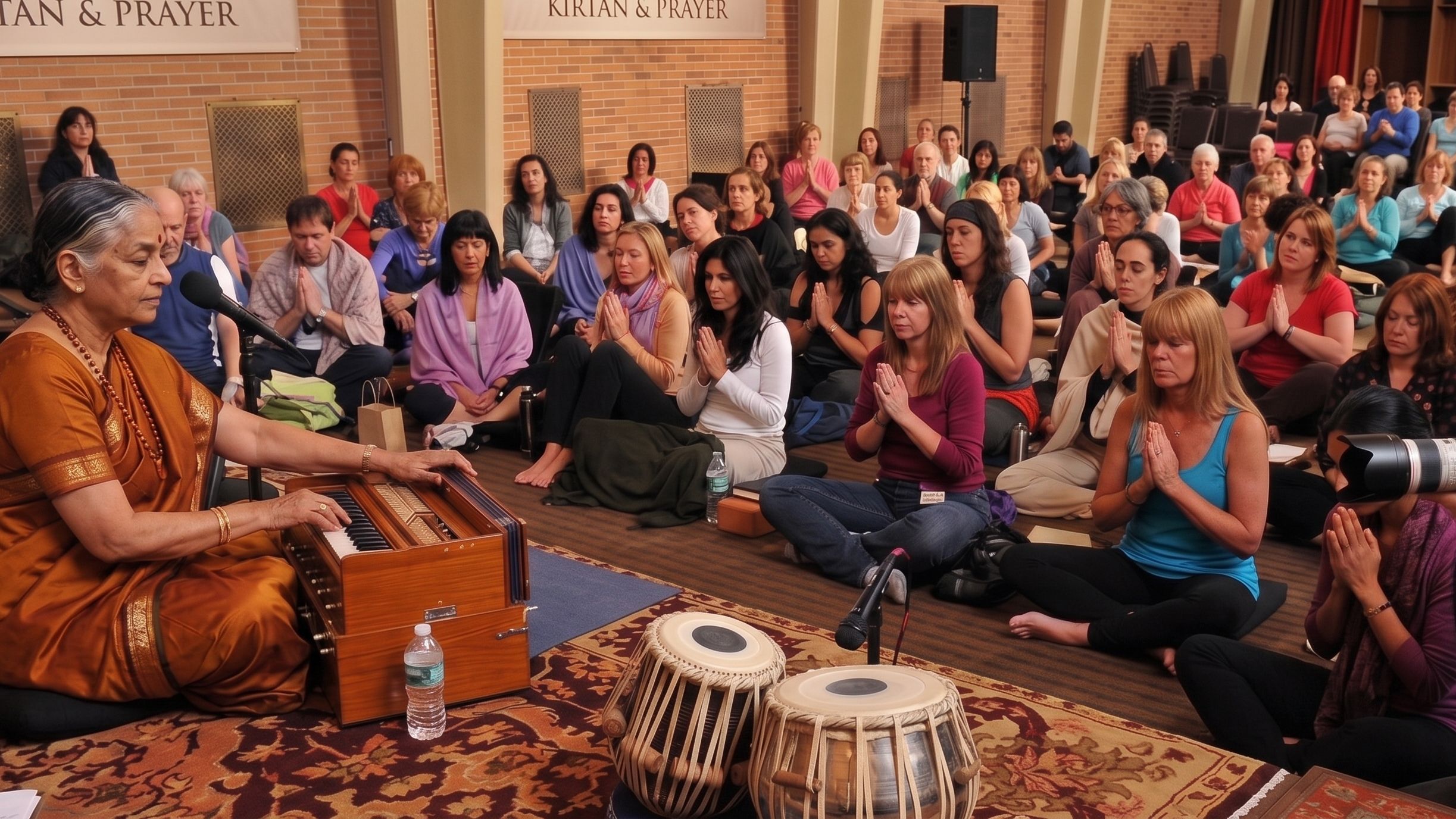
What if every prayer you've ever offered, and every Kirtan you've ever sung, could be mapped onto just a handful of essential gestures of the human heart?
Author and researcher Alexander Beiner has identified four basic forms of prayer that appear across virtually every spiritual tradition: Gimme (petition and request), Thanks (gratitude), Oops (asking for forgiveness), and Wow (pure praise and wonder at the mystery of the universe). I'd add a fifth, drawn from the wisdom of Father Thomas Keating's Centering Prayer tradition. I call it Please guide me: the prayer of surrender, of releasing our grip on the steering wheel and asking to be shown the way.
Five prayers. And when you look at Kirtan through this lens, something beautiful becomes clear: we sing all of them.
Kirtan as Full-Spectrum Prayer
The Sanskrit chants we sing in Kirtan aren't just pleasant melodies or exotic vocabulary. They're vehicles for the full range of human longing. When we call out to Hanuman for courage, we're petitioning (Gimme). When we chant Om Namo Bhagavate Vasudevaya, we're bowing in gratitude and reverence (Thanks and Wow), and asking for Guidance. When we sit in the quiet after a long chant and simply ask to be held and guided, we've entered the territory of Centering Prayer: Be with me.
The Bhakti Yoga tradition, the yoga of devotion and the heart path, understands this intuitively. George Harrison's My Sweet Lord captures it plainly: I really want to see you, know you, go with you, show you. That's not a complicated theological statement. That's a heart reaching out. Kirtan is, at its core, a fun, fast, and surprisingly accessible way to connect with Source.
The Sanctuary That Has Never Been Wounded
Father Keating wrote that prayer is a return to truth, beauty, and goodness beyond us. It takes us to a place within ourselves that has never been wounded, an inner sanctuary untouched by the accumulating weight of our stories, our losses, our identities.
This is what Kirtan can do when it's working. Not just entertainment, not just exercise for the voice, but an active technology of the heart that returns us, again and again, through repetition and melody and collective vibration, to that sanctuary. And here's the remarkable thing Keating observed: when we touch that inner place, we touch all other living people. The boundary between self and world softens. That's not metaphor. That's what chant can actually feel like when the room opens up.
An Invitation
The next time you join a Kirtan, whether you're a seasoned practitioner or walking into your first one, consider what kind of prayer you're in. Are you petitioning? Thanking? Surrendering? Just sitting in wonder?
All of it is welcome. All of it is the practice.
The chants hold space for every gesture of the human heart. That's why they've been sung for thousands of years, and why they still feel alive today.

Learn Kirtan with KLI
Author

Mike Cohen
KLI Founder
Mike Cohen, MA is founder of Kirtan Leader Institute. Since 2010 he has trained and apprenticed thousands of Kirtan Leaders across the globe, from total beginners to dozens he has guided to create/release Kirtan albums, play at festivals and tour nationally.
Recent Posts
